Collaborative Learning Strategies for Reading in Social Studies
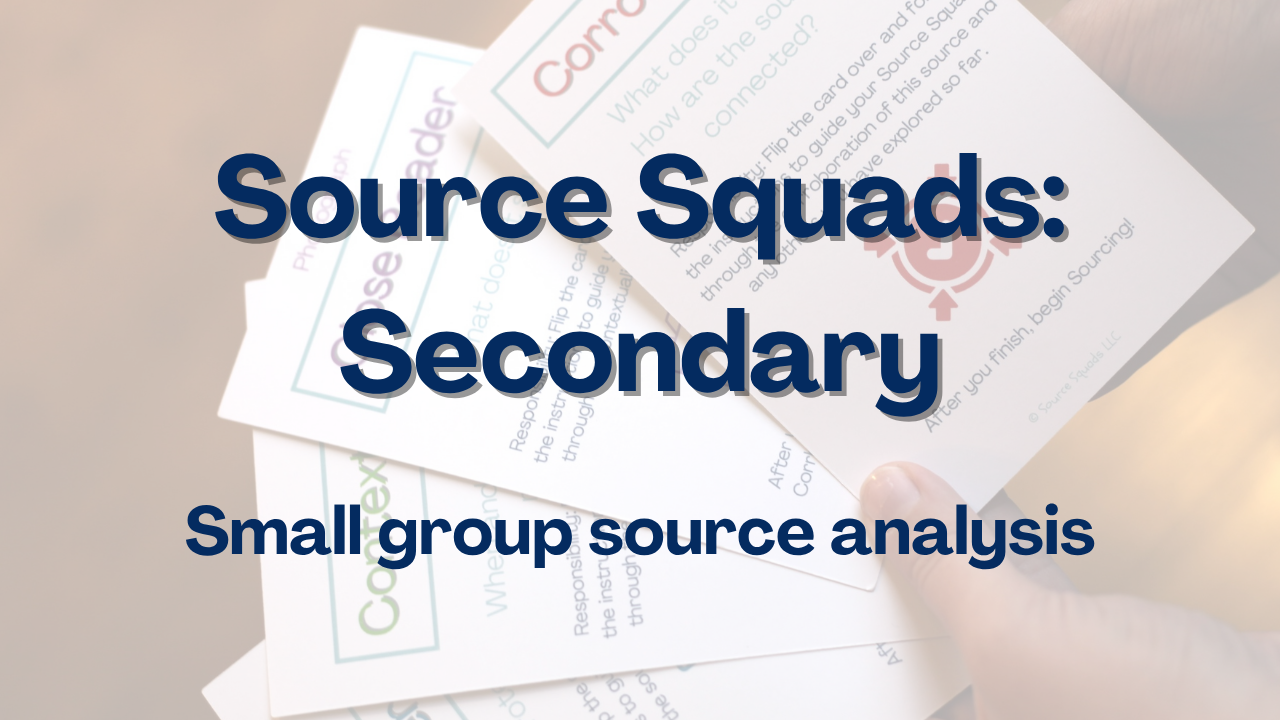
A universal framework for reading in Social Studies, Source Squads Learning Strategies help students interpret sources, collaborate, and develop disciplinary literacy through structured discussion and analysis. Flexible for any classroom, they work with or without devices.

Though they have different names and looks, each strategy presents the same process for students to practice disciplinary literacy skills.

Source Squads was the first learning strategy we developed to support Social Studies learners.

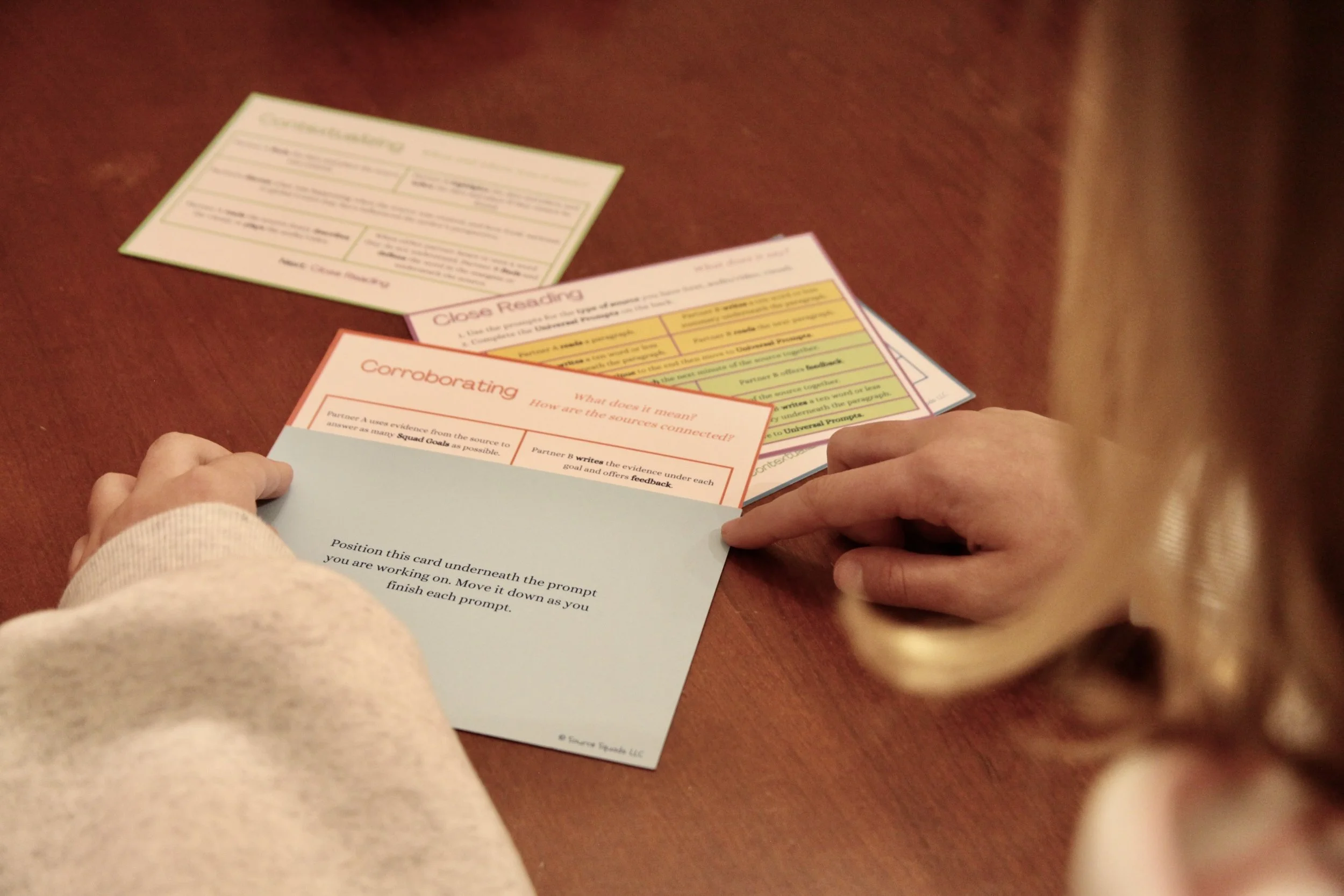
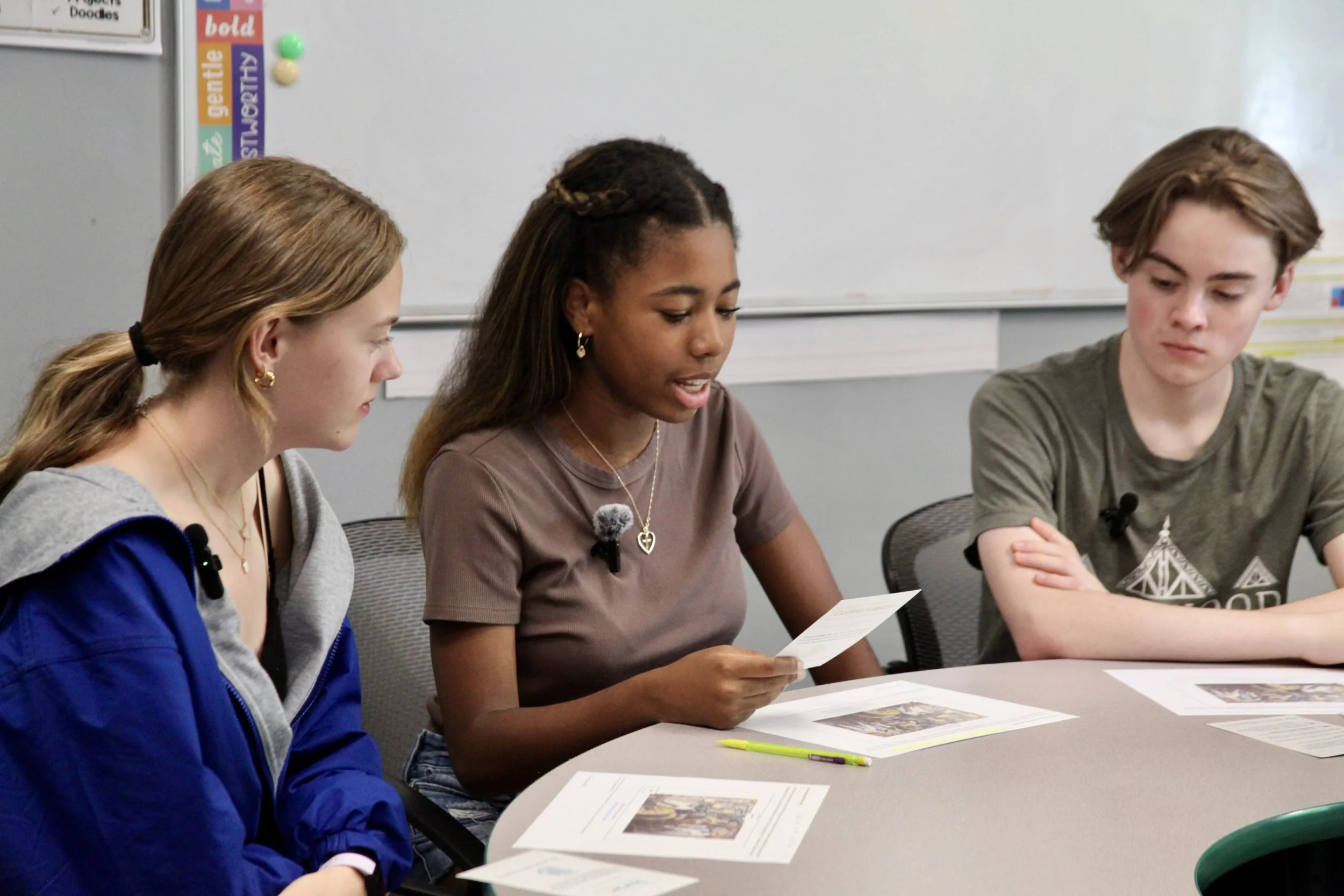
Students take turns facilitating the discussion, analysis, and annotation of rich texts. Their role cards provide prompts to help them collaborate to interpret a variety of sources.

Source Squads

Four diverse people are sitting around a table in a room with shelves of books and a window. They are looking at laptops and discussing, with papers and tablets on the table.
Close-up of a person's hand holding a black marker and writing on a printed sheet of paper on a light-colored table. The paper contains text and instructions for a voting or polling activity, with checkmarks next to some items and a small graphic of a magnifying glass. There is a laptop nearby with a sticker of a blue whale and a few black keys visible.
Young person with curly brown hair reading a small piece of paper in a room with tiled walls and a gray ceiling.
A woman in a yellow dress holding small pamphlets with text about context and correlation.

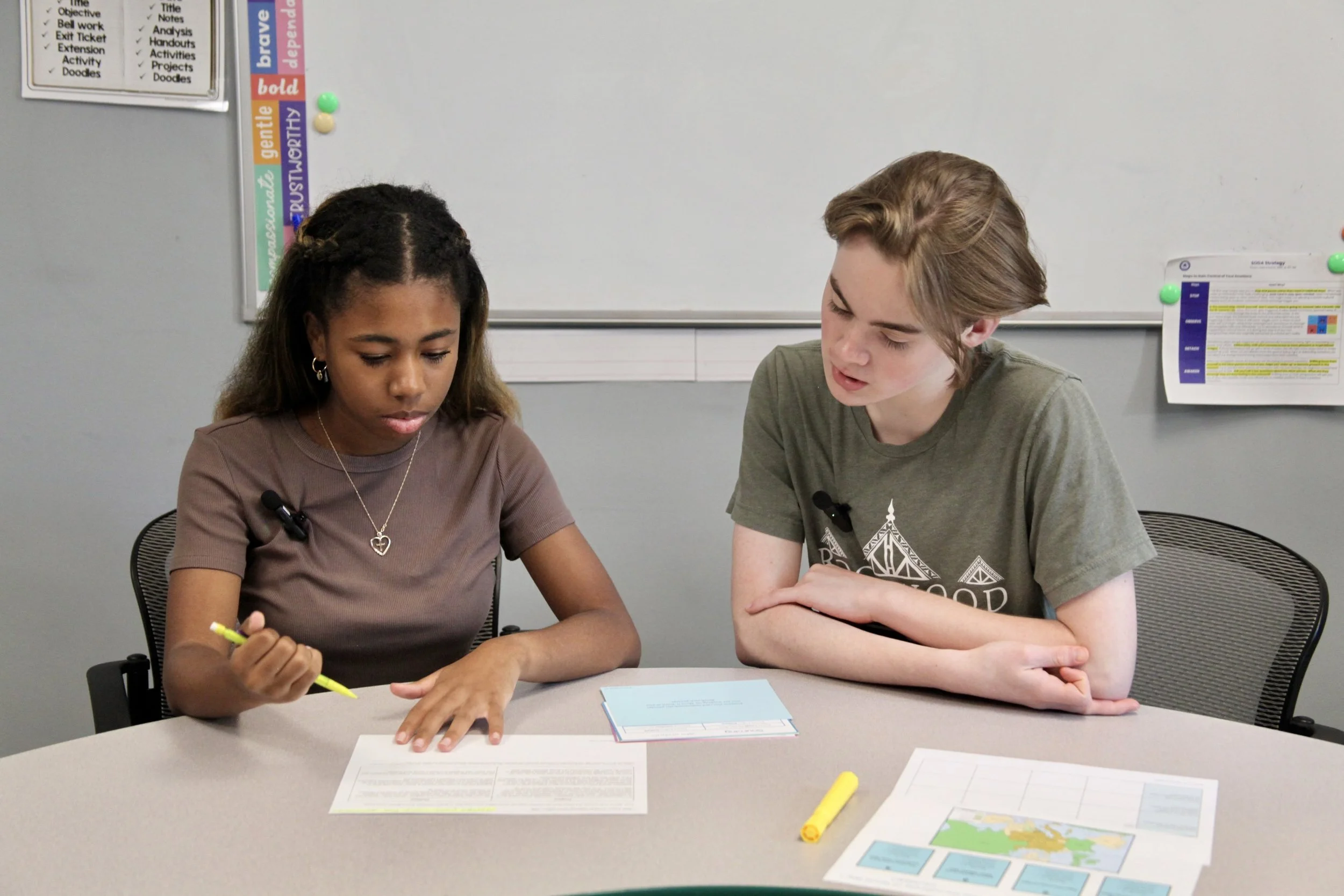
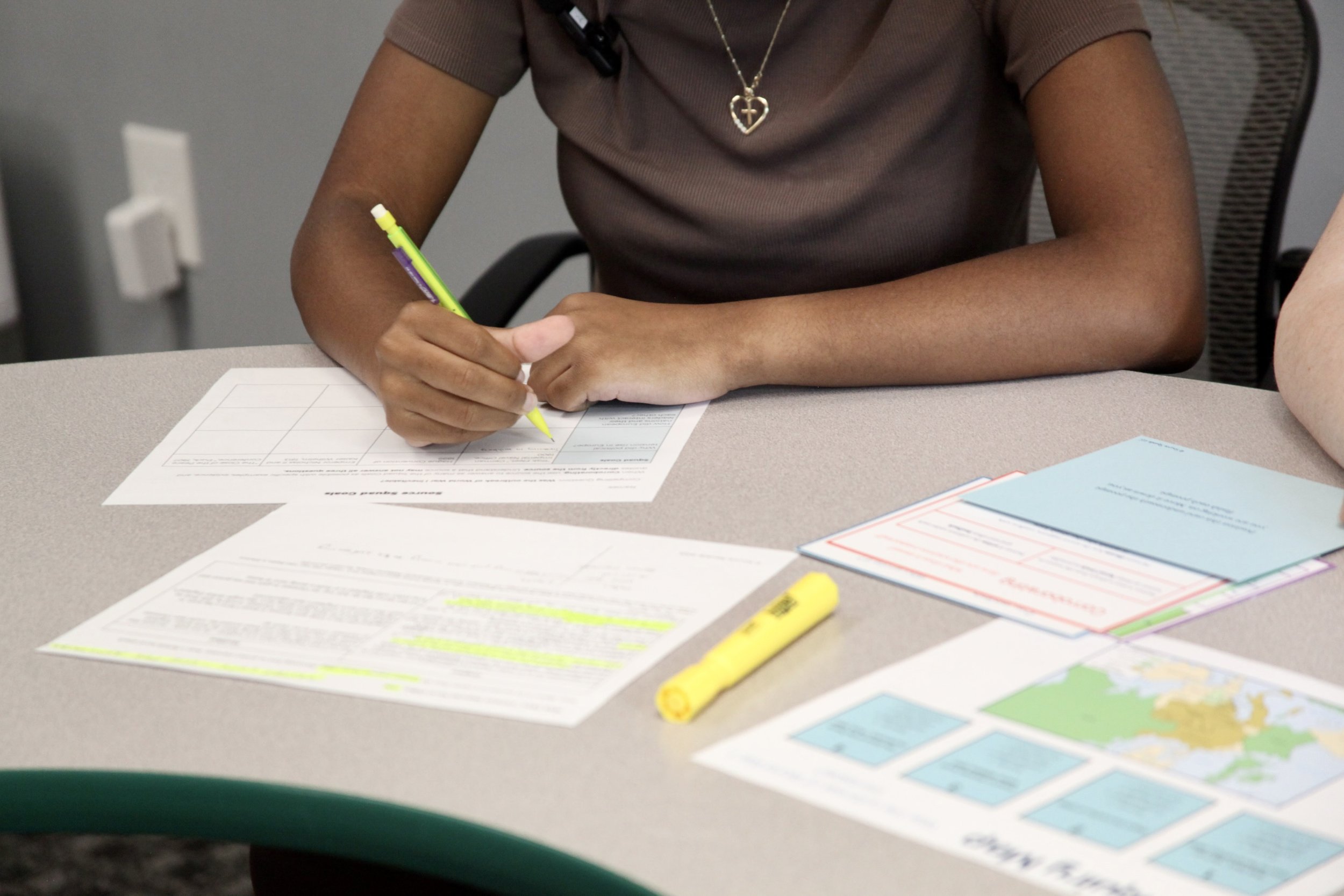
To provide more practice for students, Document Duos was created to give the structure a different look.

In pairs, students collaborate to interpret sources as “Partner A” and “Partner B,” each with their own prompts to engage with the text and each other.

Teachers are provided with extra “Auditor” cards to create groups of three for flexible grouping.
Document Duos

Two young students, a girl with dark hair and a boy with light brown hair, sit at a table working together on a project or worksheet. They are focused, with papers, a map, and highlighters on the table in front of them. They are in a classroom setting, with a whiteboard and educational posters on the wall behind them.
Person wearing a brown shirt is seated at a table, filling out paperwork with a yellow highlighter and a green pen. There are color-coded maps or charts and highlighters on the table.
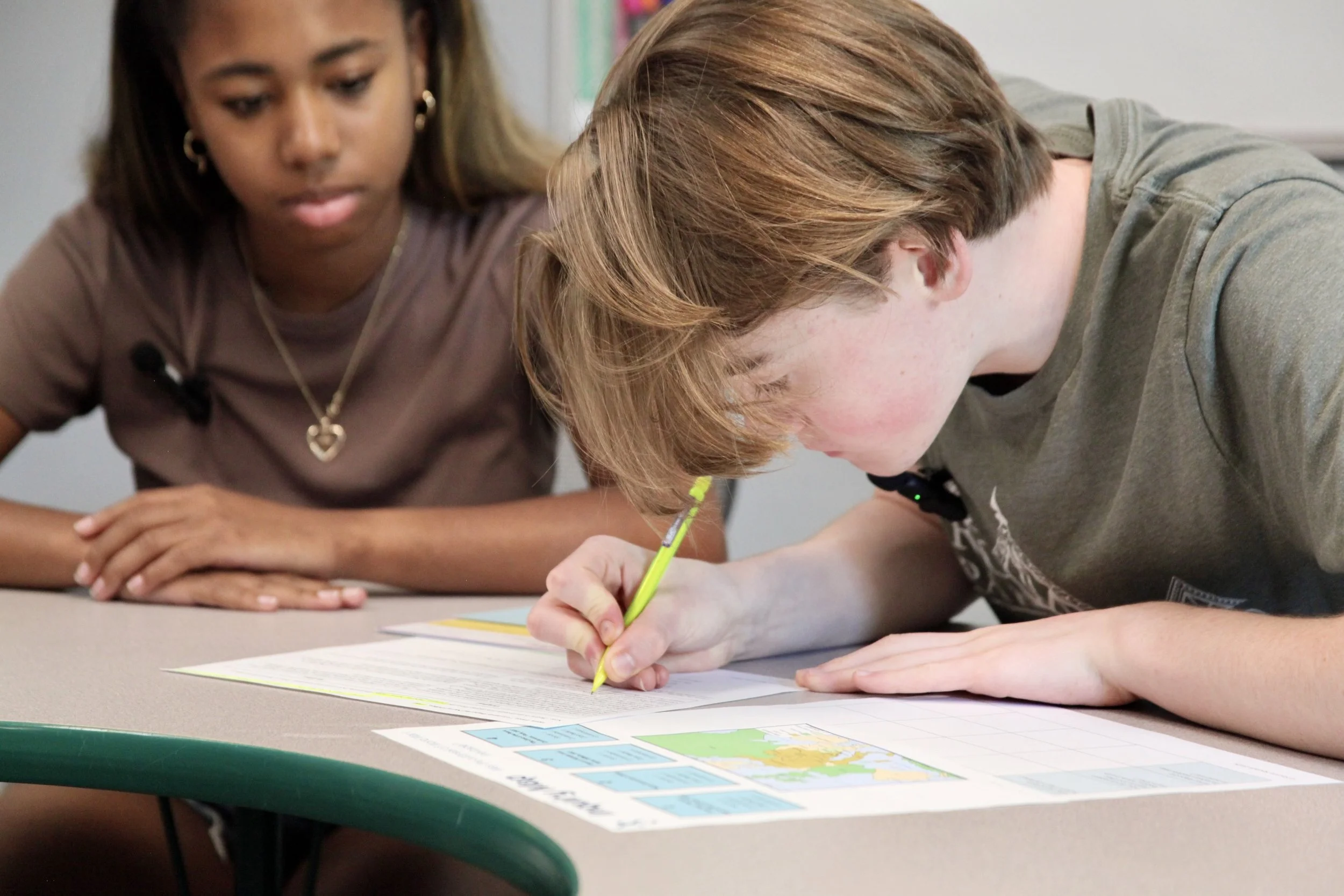
A teenager with brown hair is writing on a piece of paper with a yellow pencil while a woman with darker skin and long earrings watches. They appear to be working on a school assignment or activity.
Person holding a worksheet and other printed materials on a wooden table.

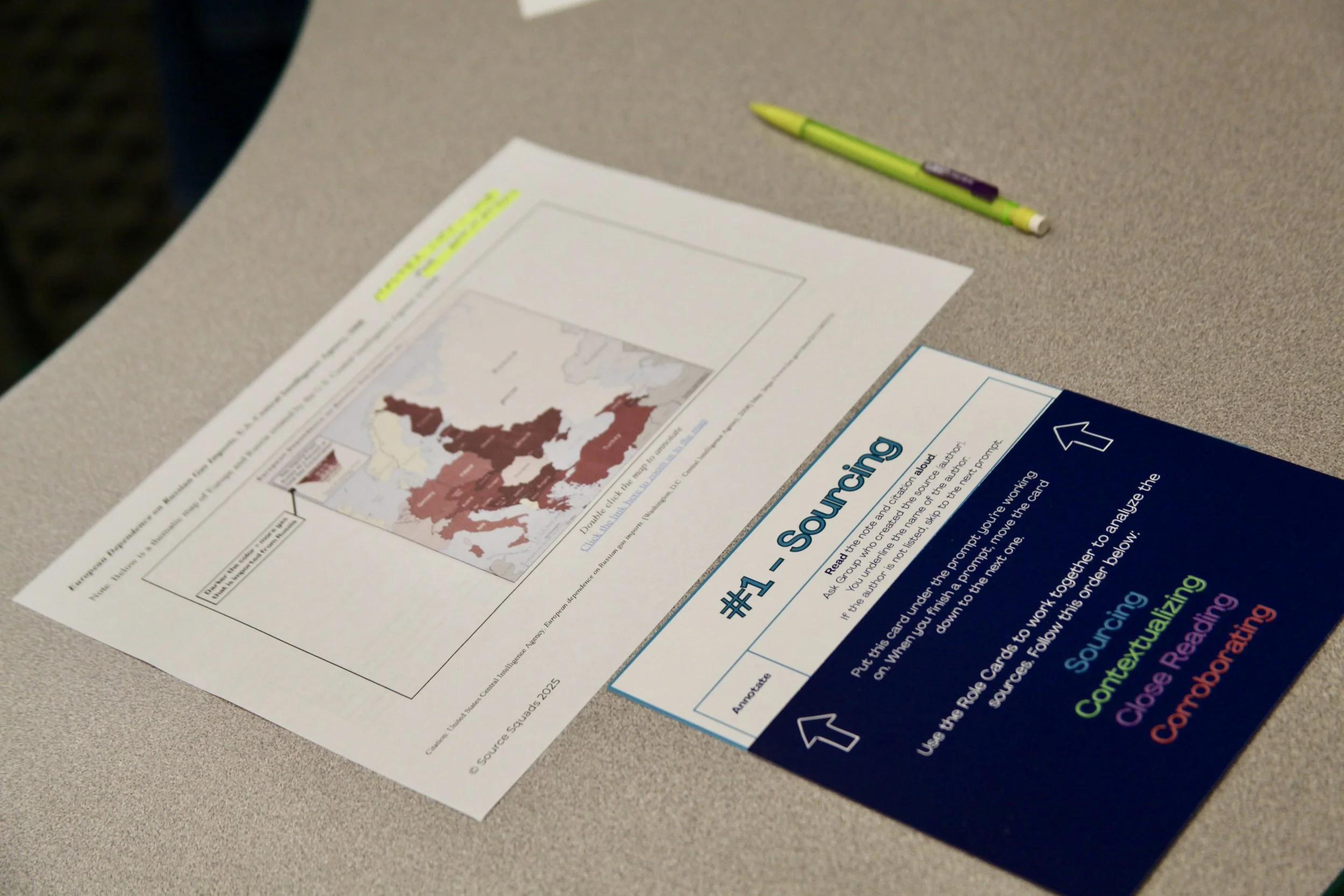
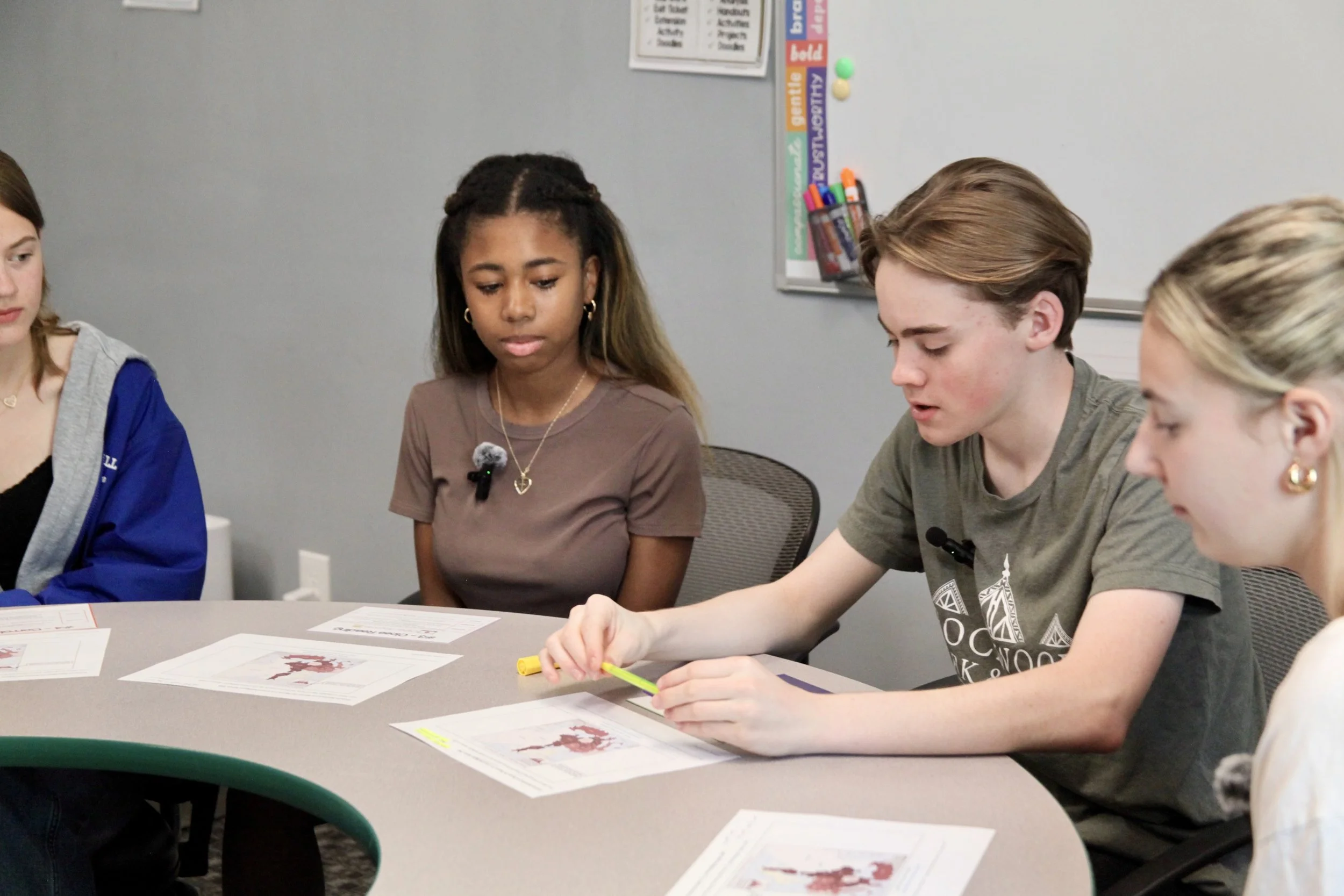
To bring our process across subjects, we created Geo Groups to help students in Geography classes interpret maps and other sources.

In groups, students act as facilitators to analyze, annotate, and discuss maps and other Geography-specific sources to better understand their purpose, perspective, and point of view.
Geo Groups

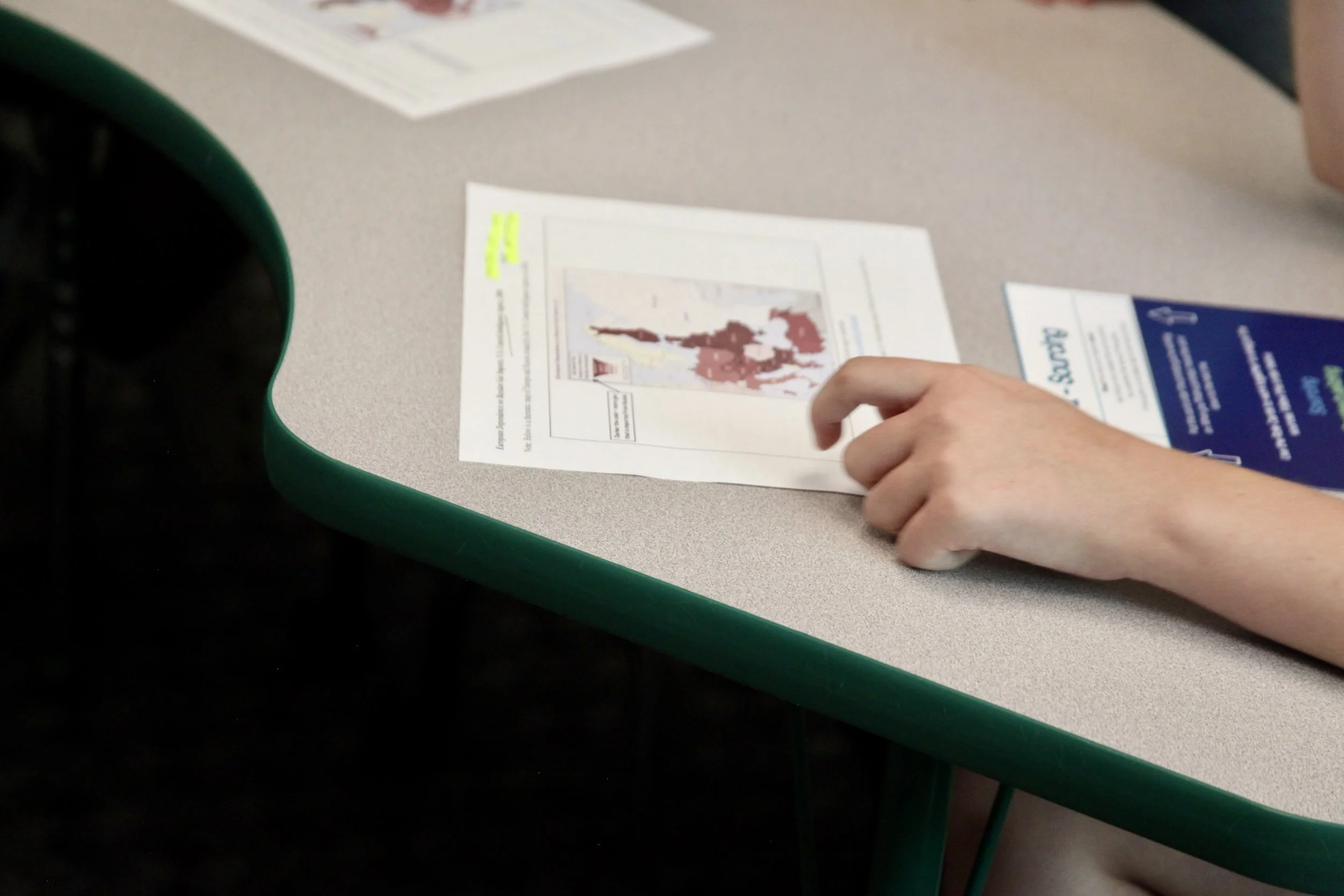
A gray table with a printed sheet of paper showing a color-coded map of Europe indicating various countries in different shades of red and beige, a green pen, and a blue informational flyer with instructions.
A group of young people sitting around a table with papers, engaging in a discussion or activity, in a classroom setting.
Group of four teenagers sitting at a table, two girls and two boys, engaged in reading and discussing printed materials, in a classroom setting.
Instruction cards with titles including 'Workboarding,' 'Close Reading,' 'Textualizing,' 'Contentualizing,' 'Source Sourcing,' and 'Geo Groups' with a map illustration, placed on a green textured surface.

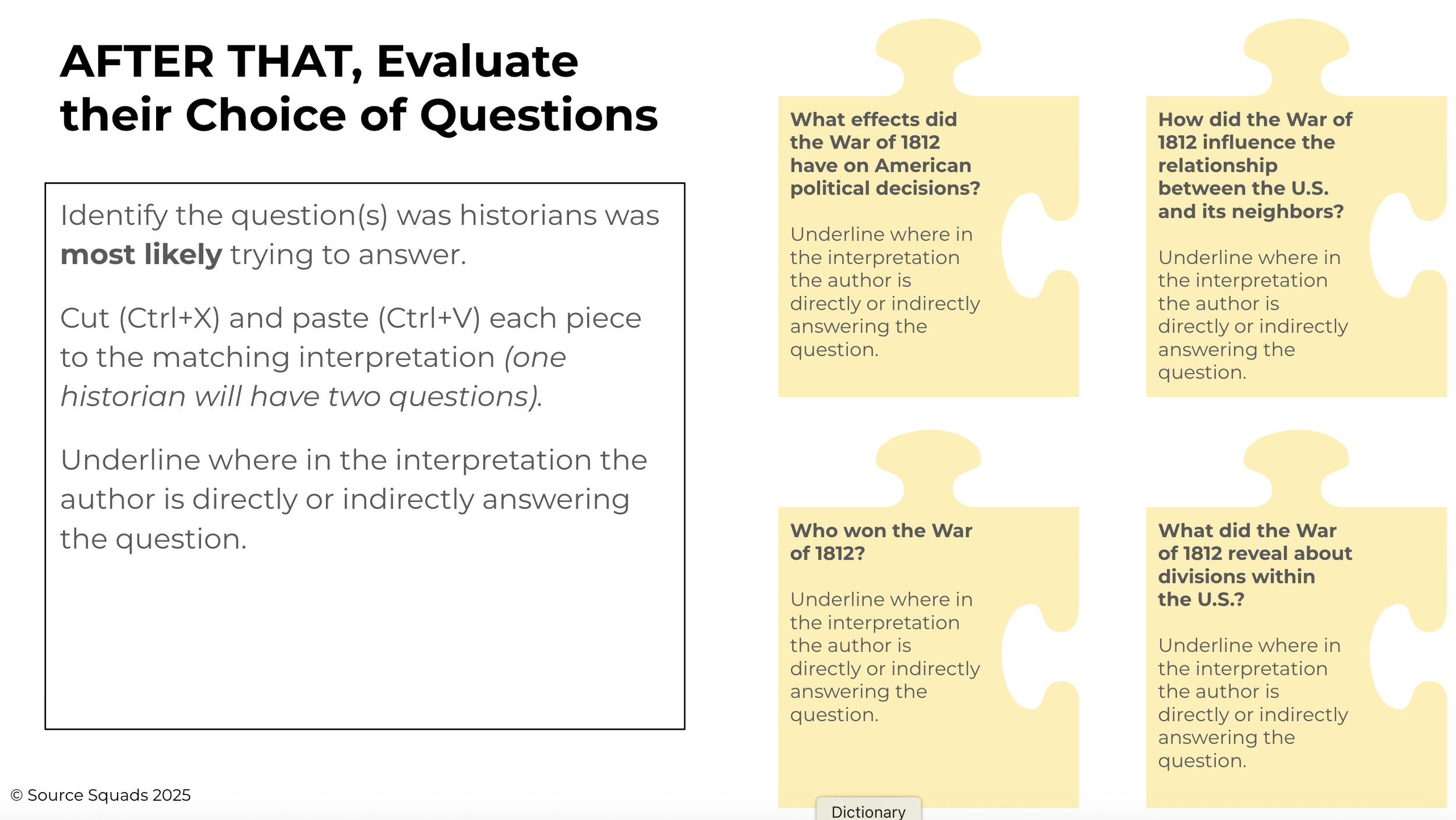
History Puzzles was created to provide students with an engaging format for exploring historiography.

In groups with specific roles, students reassemble historical interpretations along with their sources and questions into a complete “puzzle” to better understand the dialogue between historians.
History Puzzles

A worksheet with instructions for analyzing historical questions. The worksheet instructs to identify the question(s) historians are trying to answer, cut and paste each piece into matching interpretation, and underline where the author answers directly or indirectly. The worksheet has four yellow puzzle piece shapes with questions: 'What effects did the War of 1812 have on American political decisions?', 'How did the War of 1812 influence the relationship between the U.S. and its neighbors?', 'Who won the War of 1812?', and 'What did the War of 1812 reveal about divisions within the U.S.?'. The source is credited to Source Squads 2025.