
Collaborative Learning Strategies for Social Studies
Structured strategies that help students interpret sources, build meaning together, and develop disciplinary literacy through discussion, analysis, and annotation.
Students engage with primary and secondary sources using structured prompts and scaffolds.
Analyze Sources
Collaborate in Roles
Students work in small groups with defined roles to discuss, question, and interpret.
Build Interpretations
Students develop evidence-based conclusions through discussion and shared reasoning.
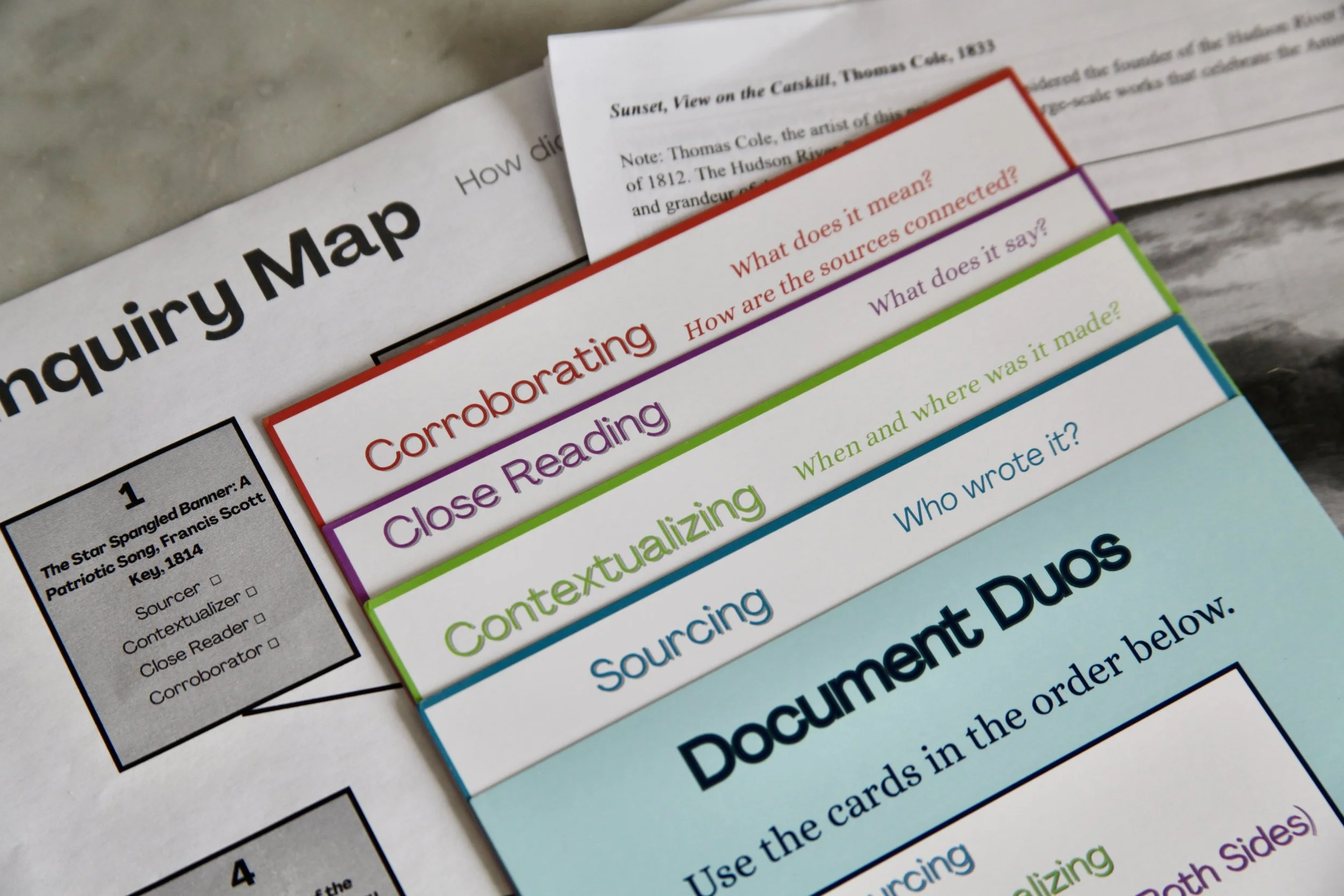
Source Squads
Students take on defined analytical roles
Groups work through sources collaboratively
Discussion is structured, not optional
All students contribute to meaning-making
Structured small-group source analysis
Turns passive source reading into active interpretation.
Partner-based reasoning and discussion
Built-in accountability and feedback
Low-prep, high-engagement structure
Document Duos
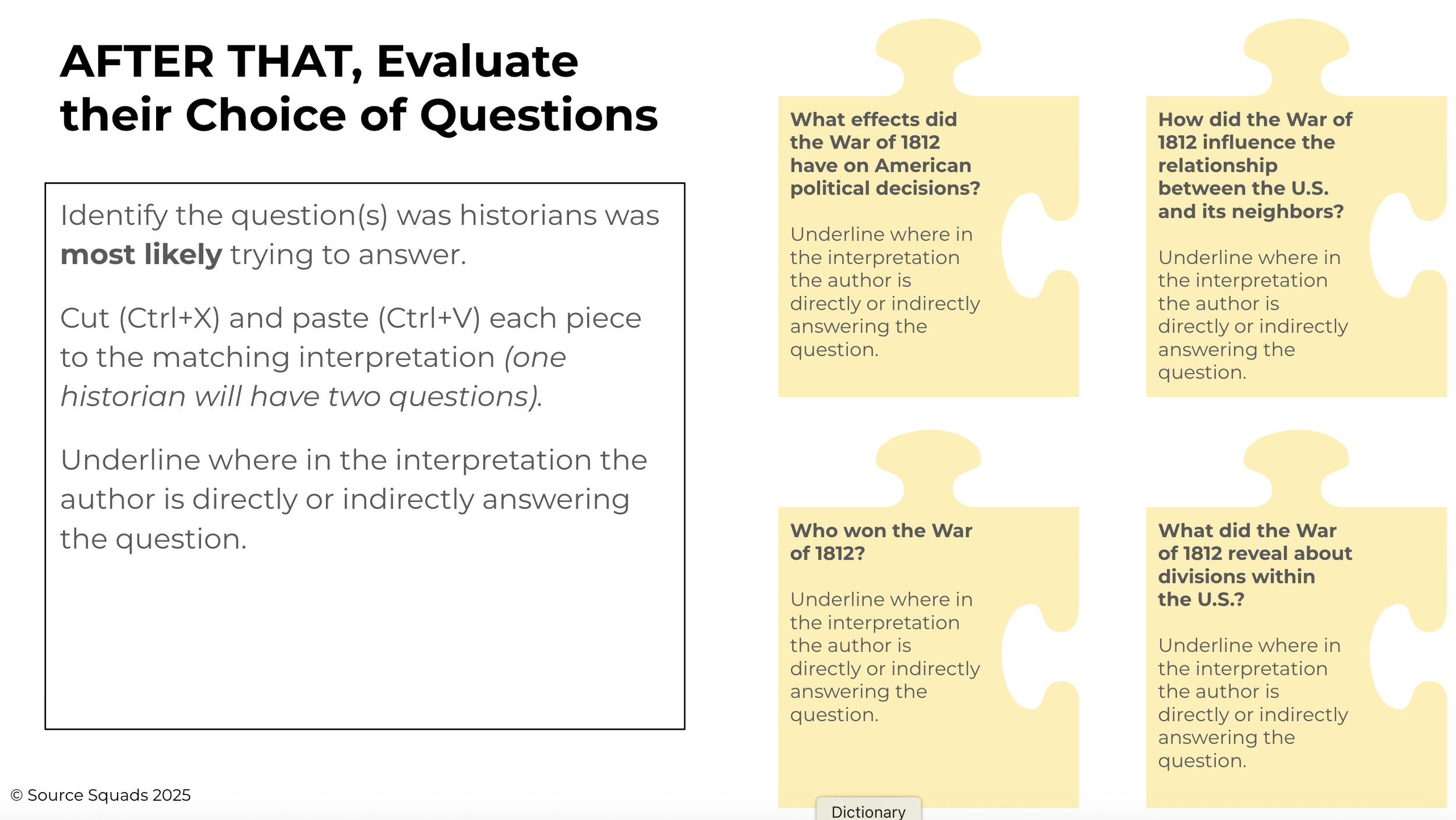
Students piece together historical arguments
Focus on interpretation over recall
Encourages debate and multiple perspectives
History Puzzles
Collaborative geographic reasoning
Spatial thinking with maps and data
Builds connections across regions and themes
Geo Groups

Built for disciplinary literacy, not generic group work
Every structure has clear roles and accountability
Focused on interpretation, not just comprehension
Designed for repeatable classroom use (not one-off activities)
What Makes These Strategies Different
Traditional Approach
Students read sources independently
Discussion is optional or uneven
Focus on answering questions
Source Squads Approach
Students think together
Discussion is structured and required
Focus on building interpretations